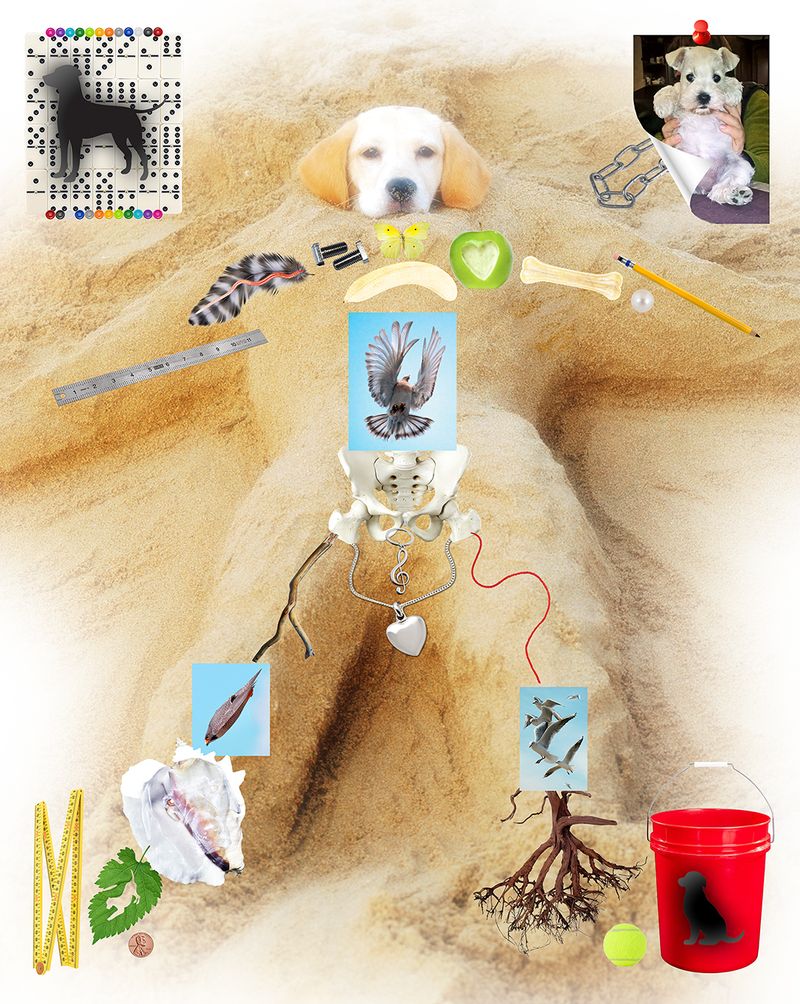
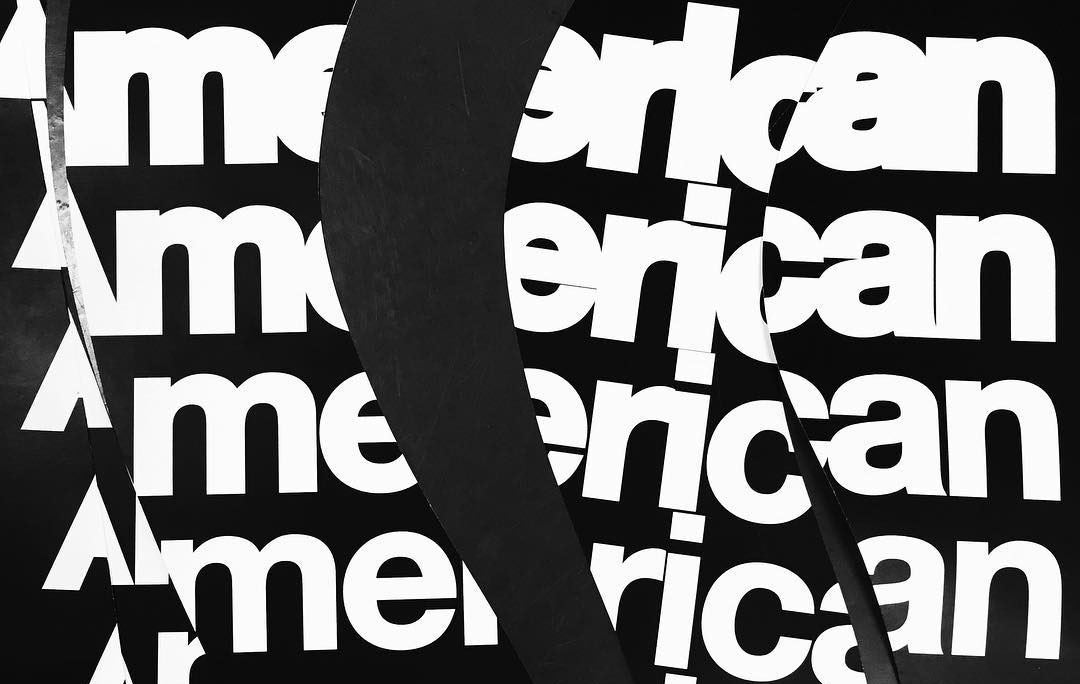
As a means of healing his twelve-year-old self, this graphic designer reaches through the surreality of internet ephemera to unlock the person he always wanted to be, with the help of glowing labradors, esoteric diagrams and digital collage.
Golfee is a golf performance app designed to help players track shots, analyze game stats, and view GPS course maps. It empowers golfers to make smarter decisions, improve strategy, and understand performance through clean, intuitive UI.
What if an AI-led totalitarian regime banned analogue technology? What if we were forced to live underwater due to climate catastrophes? And what if our emotions were no longer private but visible to everyone?
These are just some of the provocative questions that fuel speculative design—a discipline that dares to imagine alternative futures by blending creativity with research. It challenges conventional thinking, moving beyond aesthetics and functionality to turn design into a powerful tool for critical reflection.
At IED Firenze, students of the Master’s in Graphic Design explored this forward-thinking approach in depth as part of their Research and Trend Forecasting course. Guided by professor and course coordinator Isabella Ahmadzadeh, they embraced the role of future thinkers, creating individual “what if” scenarios rooted in emerging trends.
Lara Piknovik
Located in the heart of Florence, IED Firenze is a hub for innovation, culture, and creativity. It offers an international environment where students from around the world come together to push the boundaries of design. The school blends traditional Italian craftsmanship with contemporary visions, fostering bold experimentation across disciplines.
Each student developed a unique and thought-provoking premise—ranging from dystopian projections to critiques of current societal issues—as the conceptual foundation for a 32-page visual essay. These essays became immersive spaces for experimentation, where collage, personal artwork, typography, and AI-generated imagery converged to visualize speculative futures.
The result is a collection of visual narratives that go beyond showcasing design skills. They question the trajectory of our world, examine the cultural and technological shifts ahead, and ultimately remind us of the power of design—not just to reflect reality but to reimagine it.
To learn more about the Master’s Course in Graphic Design at IED Firenze, visit ied.edu.
Riya Allen
Nick Arbelaez
Nicole Ferraresi
Do stories and artists like this matter to you? Become a Colossal Member today and support independent arts publishing for as little as $7 per month. The article IED Firenze Graphic Design Students Explore Speculative Design appeared first on Colossal.
Water purifiers are becoming more common sights in our homes, thankfully because of more attention being paid to one’s health. Because of that popularity, water purifier designs are also undergoing a shift away from the stereotypical white products that dominate the market to objects that can stand proudly in the middle of any kitchen. Most of these, however, still adhere to certain conventions, particularly the use of shiny metallic surfaces to mirror (no pun intended) the appearance of most kitchen appliances and cookware.
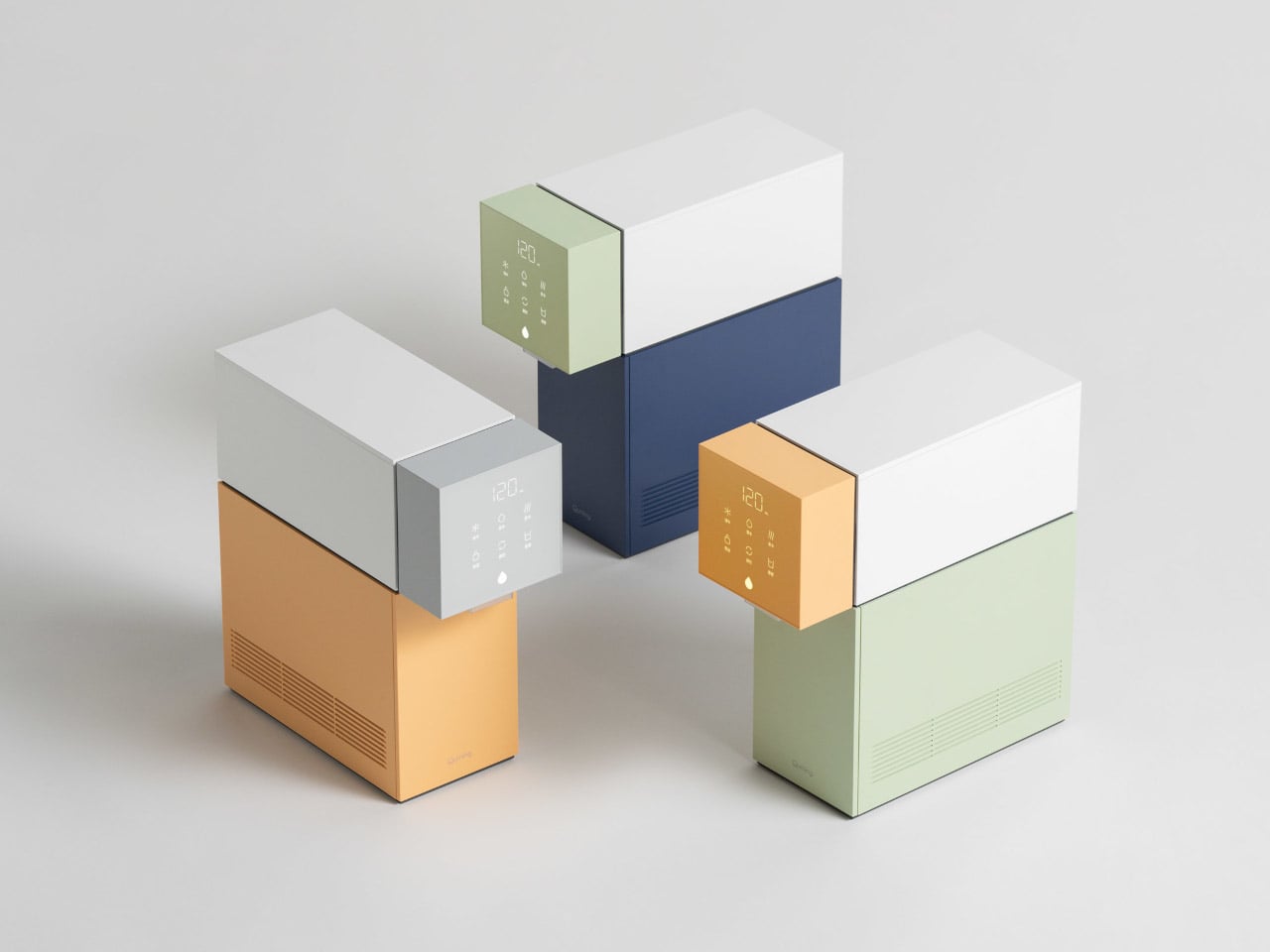
This water purifier concept design, however, bucks the trends in more ways than one. Not only does it eschew the smooth curves of many water purifier designs, it actually embraces the rawness of blocky shapes, turning the appliance into a graphic design object. Even better, this design even lets you customize your water purifier to your tastes (pun not intended again).
Designers: Yejin Shin, Cheolsu Park, Hyunjeong Lee (BEBOP)
More design-conscious water purifiers try to display a pleasing image, which usually translates to generous use of soft curves, light colors, and minimal details. The Hyundai Quming Delight concept only checks that last item, because you might not even recognize it as a water purifier for being devoid of almost any and all identifiable features. It looks more like a piece of Mondrian sculptural art or giant toy blocks glued together, which is perhaps the thoughts that the design intentionally wants to evoke.
The use of geometric shapes, particularly blocks, gives the Quming Delight a very different personality from other water purifiers. But what makes it even more special is that some of the sides of these blocks can be swapped out with other colored panels, opening the doors to customization and artistic expression. It’s probably going to clash with a purely black or purely white kitchen interior, but it will stand out in a good way.
The design is also bereft of visible physical controls, and the only way to operate it is through a touch control panel in front that’s cleverly hidden behind a translucent color finish. It doesn’t seem possible to change the colors of this part of the machine, though. And the lighting for the buttons also seems to be fixed to a faint white glow.
Thanks to its simple shape, using the water purifier is supposedly simple as well. The filter canisters are conveniently hidden behind the removable front panel, while the blocky faucet can be used and removed using a simple twisting motion. That said, it does mean you have to touch the faucet every time you want to turn it on, risking contamination from the dirt on your hands. There is also no catch basin in this design, which is a must-have for anything that dispenses liquid, and it would have been trivial to add yet another block for that component.
The post Blocky water purifier concept brings a fun touch of graphic design to your kitchen first appeared on Yanko Design.
Emily Van Hoff merges her background in graphic design with the practical crafting skills she picked up as a child in her vibrant wall hangings. From her home studio in Chicago, Van Hoff pays homage to women crafters of generations past as she stitches geometric quilts in bold color palettes of bubblegum pink, lavender, and cobalt. Thick stripes, bisected circles, and clean rows of stitches comprise many of the curved pieces, which the artist describes as a translation of “my digital design into a beautiful tactile object.”
Van Hoff’s vivid works sell out quickly, so keep an eye on her site and Instagram for future shop updates. More
Do stories and artists like this matter to you? Become a Colossal Member today and support independent arts publishing for as little as $5 per month. The article Color-Blocked Wall Hangings Stitch Graphic Design Principles into Quilts by Emily Van Hoff appeared first on Colossal.
Through case studies and interviews, Anja Lutz captures the ethos of her Berlin-based studio A–Z, a snapshot of design in the present moment and speculations on its future.
Amidst the cobblestone streets of Chinatown in Prato, Italy, typography has become a bridge between worlds. Beatrice Murphy, a student in the Master’s Course in Graphic Design at Istituto Europeo di Design (IED) Firenze, developed her thesis project by examining and dissecting the bilingual signage of Prato’s Chinatown. Her project aimed to not only reveal numbers and data but also instances of human connection and diversity.
Through a series of booklets and graphic materials, Beatrice transports us into the bustling streets of the neighborhood and its storefronts. More
Do stories and artists like this matter to you? Become a Colossal Member today and support independent arts publishing for as little as $5 per month. The article IED Firenze Graphic Design Student Explores Cultural Fusion and Exchange Through Bilingual Signage in Prato’s Chinatown appeared first on Colossal.
I decided to practice more with an illustrator. I wanted to copy the paper cut effect on the computer. I love abstract art, so I chose this. Enjoy watching!
Get access to thousands of freshly updated design inspiration pieces by adding Muzli to your browser. Loved by 900k designers worldwide, Muzli is the leading go-to browser extension for creative professionals.
The Art of Graphic Design: From Creativity to Communication
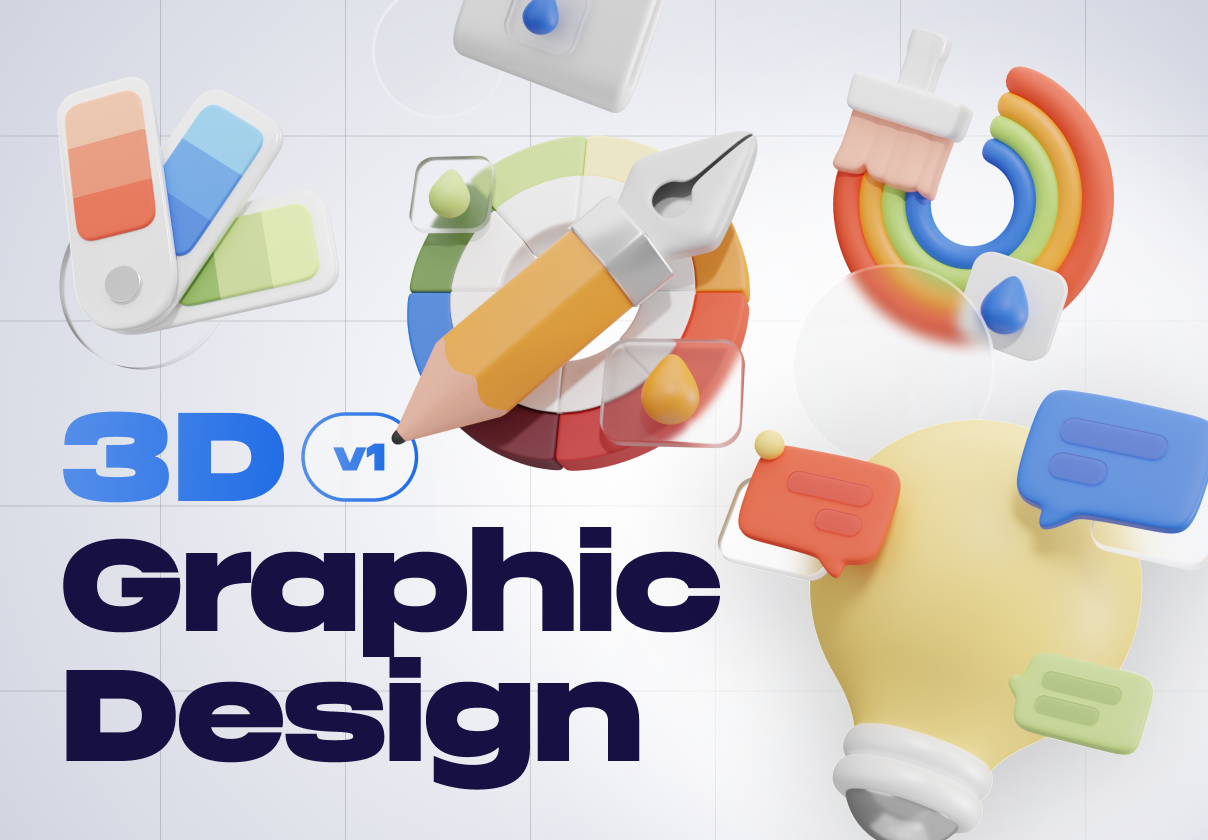
Graphic design is a dynamic and influential field that plays a pivotal role in shaping how we perceive and interact with the world. It's the art of visual communication, combining creativity, technology, and psychology to convey messages, evoke emotions, and inspire action. In this article, we'll delve into the world of graphic design, exploring its significance, principles, and the essential skills every graphic designer should possess.
What is Graphic Design?
At its core, graphic design is the process of using visual elements, typography, and layout to communicate a message effectively. Whether it's a logo, poster, website, or packaging, graphic design is everywhere, influencing our choices and perceptions in ways we may not even consciously realize.
The Significance of Graphic Design
Visual Communication: Graphic design is the language of visual communication. It can simplify complex ideas, make information more accessible, and create memorable impressions.
Branding: A strong visual identity, crafted through graphic design, helps businesses stand out and establish a unique brand presence in a competitive marketplace.
Emotional Connection: Design can evoke emotions, making it a powerful tool for storytelling and creating connections between brands and their audience.
User Experience: In digital design, graphic elements contribute significantly to the overall user experience, affecting how users navigate and interact with websites and apps.
Principles of Graphic Design
Balance: Achieving visual equilibrium by distributing elements harmoniously within a design. Balance can be symmetrical or asymmetrical, depending on the desired effect.
Contrast: The juxtaposition of different elements (e.g., colors, fonts, shapes) to create visual interest and hierarchy.
Emphasis: Highlighting a specific element or message to draw attention and guide the viewer's eye.
Unity: Ensuring all elements in a design work together cohesively, creating a sense of completeness and purpose.
Proximity: Grouping related elements close together to signify their connection and separate unrelated elements.
Essential Skills for Graphic Designers
Creativity: The ability to think outside the box and come up with original, innovative concepts and designs.
Typography: Mastery of typography is crucial, as it directly affects readability and the overall impact of a design.
Color Theory: Understanding the psychology of colors and their combinations is essential for conveying emotions and messages effectively.
Software Proficiency: Proficiency in graphic design software like Adobe Illustrator, Photoshop, and InDesign is a must.
Communication: Effective communication skills are vital for understanding client needs and conveying your design rationale.
Adaptability: The graphic design landscape is constantly evolving. Staying up-to-date with trends and technologies is essential.
The Creative Process
Research: Understand the project's goals, target audience, and context before diving into design.
Conceptualization: Brainstorm ideas, sketch rough drafts, and develop a design concept that aligns with the project's objectives.
Execution: Bring your concept to life using design software, carefully selecting colors, typography, and visual elements.
Feedback: Share your design with others for constructive feedback and iterate based on the input received.
Finalization: Polish your design, ensuring it meets all project requirements and is ready for delivery.
Conclusion
Graphic design is more than just aesthetics; it's a powerful means of communication that influences our daily lives. From advertising to branding, graphic design shapes how we perceive the world around us. By mastering the principles and skills of graphic design, designers can create visually compelling, meaningful, and impactful designs that resonate with audiences and leave a lasting impression. Whether you're a seasoned professional or just starting, the world of graphic design offers endless opportunities for creativity and expression.