Televisions used to be heavy boxes that dominated a room. Now, the latest LG and Samsung prototypes at CES 2026 look more like posters than TVs, with panels so slim they almost blend into the wall and bezels that seem to disappear when the screen lights up. These displays are no longer just appliances in the corner of a living room. They are becoming design elements that can live almost anywhere you might put a sheet of paper.
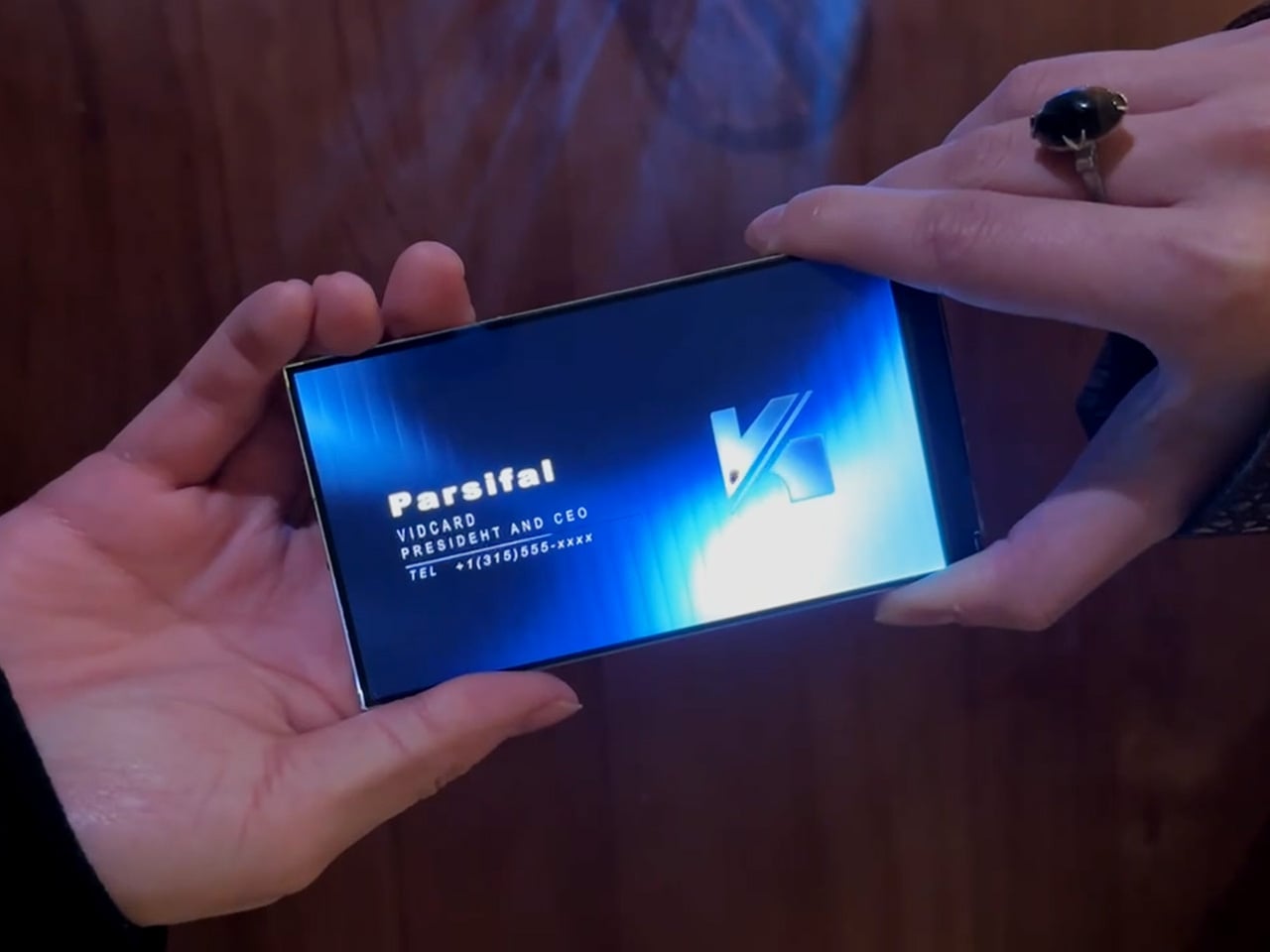
That shift makes it feel natural to ask a simple question: if screens can be this thin, why not put them where we have always relied on print? Business cards are a perfect example. They carry introductions, identity, and a first impression in a tiny rectangle. VidCard takes that same footprint and turns it into a living surface, transforming the familiar business card into a personal video introduction that plays in the palm of your hand.
Designer: Parsifal
Click Here to Buy Now: $59 $99 (40% off). Hurry, only a few left! Raised over $66,000.
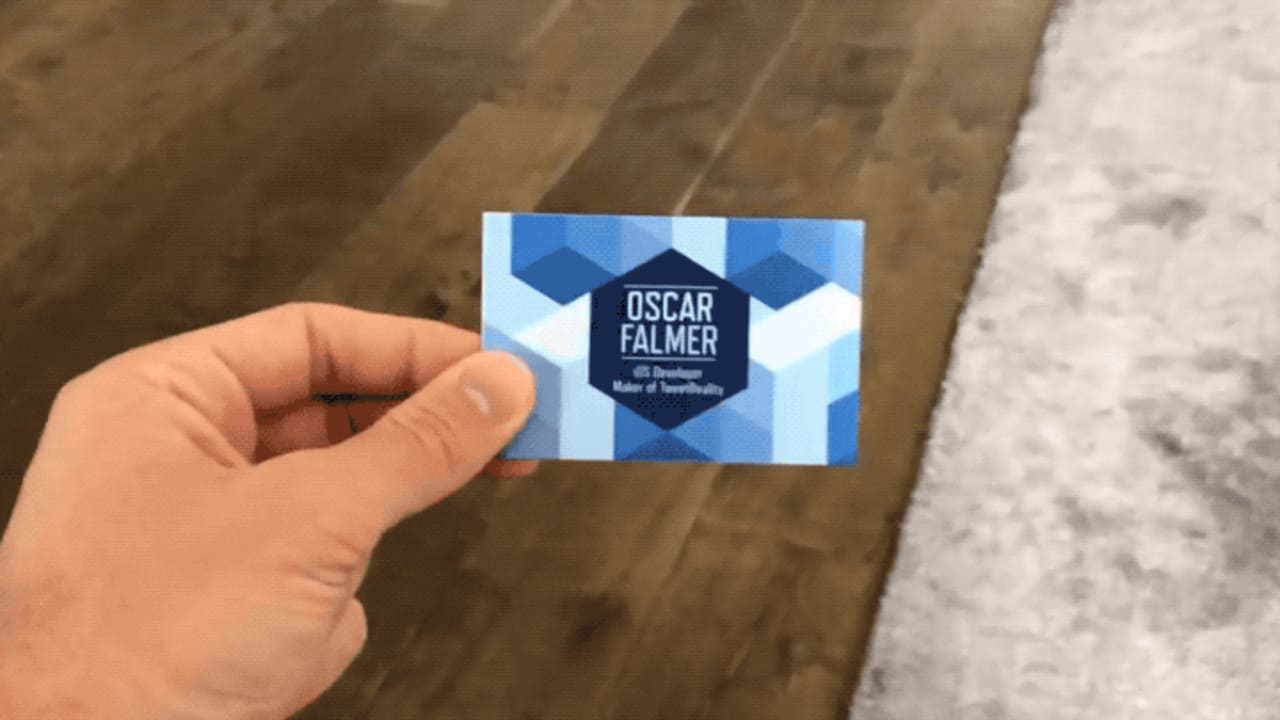
VidCard is basically what it sounds like: a rigid card with a 5 inch, 1280×720 IPS LCD screen built in, playing a looping video of you introducing yourself or your brand motion graphic. The whole thing measures 120.05mm by 86.4mm, which puts it somewhere between a credit card and a small phone, and it’s under 5mm thick. That’s genuinely impressive when you remember there’s a battery, NFC chip, display controller, and 256MB of onboard storage packed inside. The card charges via contact pins, lasts about an hour of continuous playback (roughly 120 to 240 interactions per charge), and syncs content through a companion app on iOS or Android. You upload your intro video, it pushes to the card, and you’re set. The screen itself looks clean in the campaign photos and bright enough for indoor use.
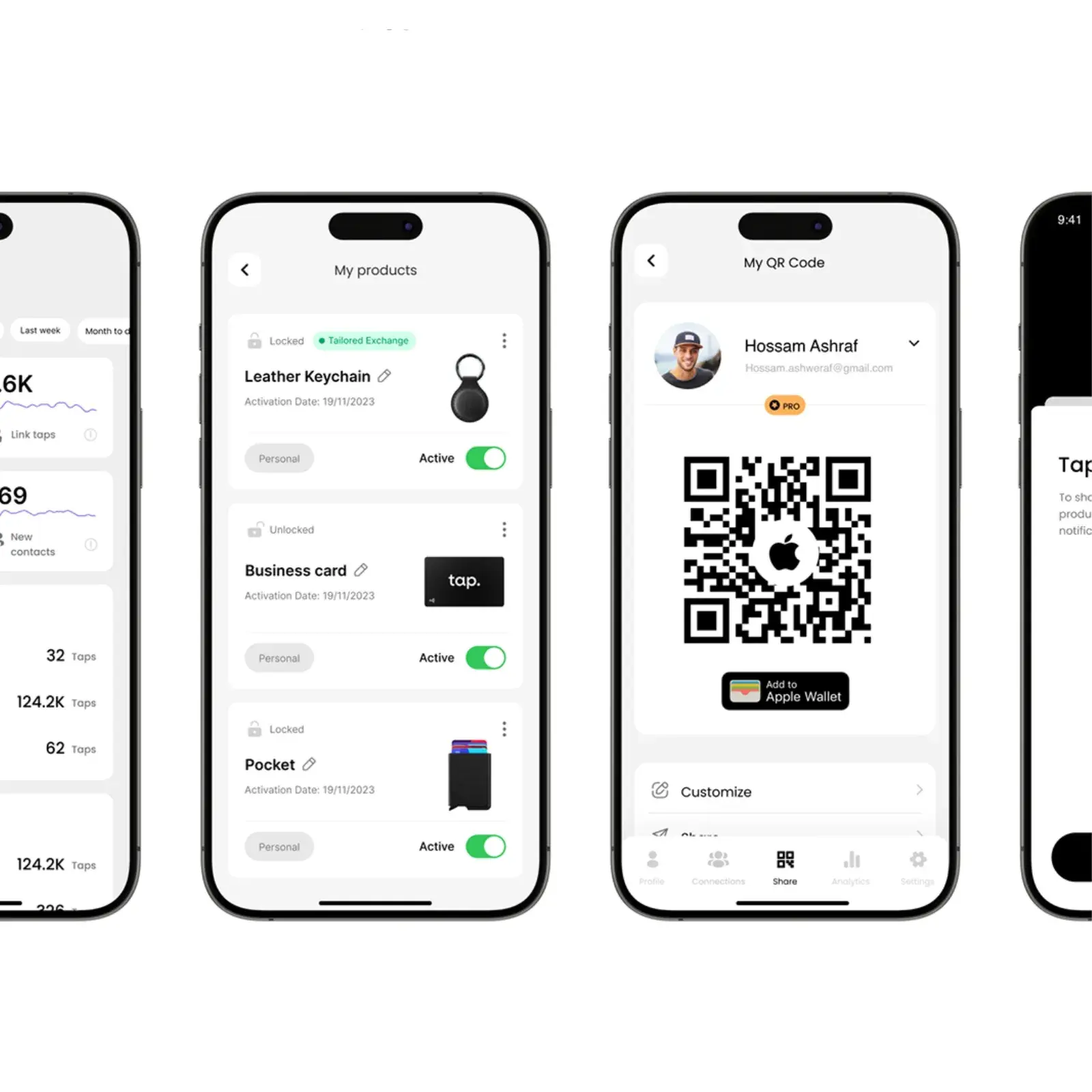
The NFC feature sidesteps the whole “how do I actually save your contact info” problem. You tap the card against someone’s phone, and it pulls up your mobile optimized landing page with your video, company profile, documents, and whatever else you want to link. No app download required on their end, which makes sense because nobody wants to install something just to see your business card. Real time analytics track who viewed your profile, when they watched, how long they engaged, and if they came back for a second look. There’s a slightly dystopian charm to getting a notification at 11pm that someone just rewatched your intro for 87 seconds, but it does give you actual data to inform follow ups instead of wondering if your card got tossed in a drawer.
Here’s the thing, though. You know what else has a high resolution screen, NFC, internet connectivity, and can play video? The phone in your pocket. You could theoretically just show someone your intro video on your phone, tap for NFC sharing, and achieve most of the same result for zero additional hardware. VidCard’s counter to that is the physical artifact itself. Handing someone a glowing screen feels different than showing them your phone (besides, unlocking a phone, opening your gallery, and finding the right video can take painful minutes), and if you leave the card behind with a high value contact, it becomes a keepsake that lives on their desk instead of disappearing into a contacts list. That’s either brilliant or unnecessary depending on how much you value the showmanship in networking, although I genuinely can’t decide which camp I’m in.
The founders claim inspiration from Call of Duty: Advanced Warfare, where a character hands over a video business card inviting you to join a fictional military contractor. That’s a deeply nerdy origin story, and I respect it. VidCard works best in situations where you need to stand out in a sea of forgettable interactions: trade shows, high stakes sales meetings, investor pitches, creative industry networking where showing your work matters more than listing credentials. It’s overkill for casual meetups or industries where a LinkedIn connection does the job, but if you’re trying to leave an impression on someone who sees 50 people a day, a card that talks and moves will get you remembered. The real test is whether that memory translates to actual follow through, which the analytics dashboard is designed to help with by showing you who’s genuinely interested versus who just thought the card was neat.
VidCard is live on Kickstarter through February 5, 2026, with early bird pricing starting at $59 USD for a single unit, $162 USD for a three pack, and scaling up to $599 USD for a 10 unit business pack with bulk branding options. Estimated delivery is June 2026 for early backers, with standard shipments following through June 20. The campaign has already cleared its funding goal by a wide margin, which suggests the concept resonates with enough people that we may just end up seeing video or even holographic business cards in the not-so-distant future.
Click Here to Buy Now: $59 $99 (40% off). Hurry, only a few left! Raised over $66,000.The post This 5-Inch “Video Business Card” Wants To Replace Your Stack Of Paper Cards first appeared on Yanko Design.
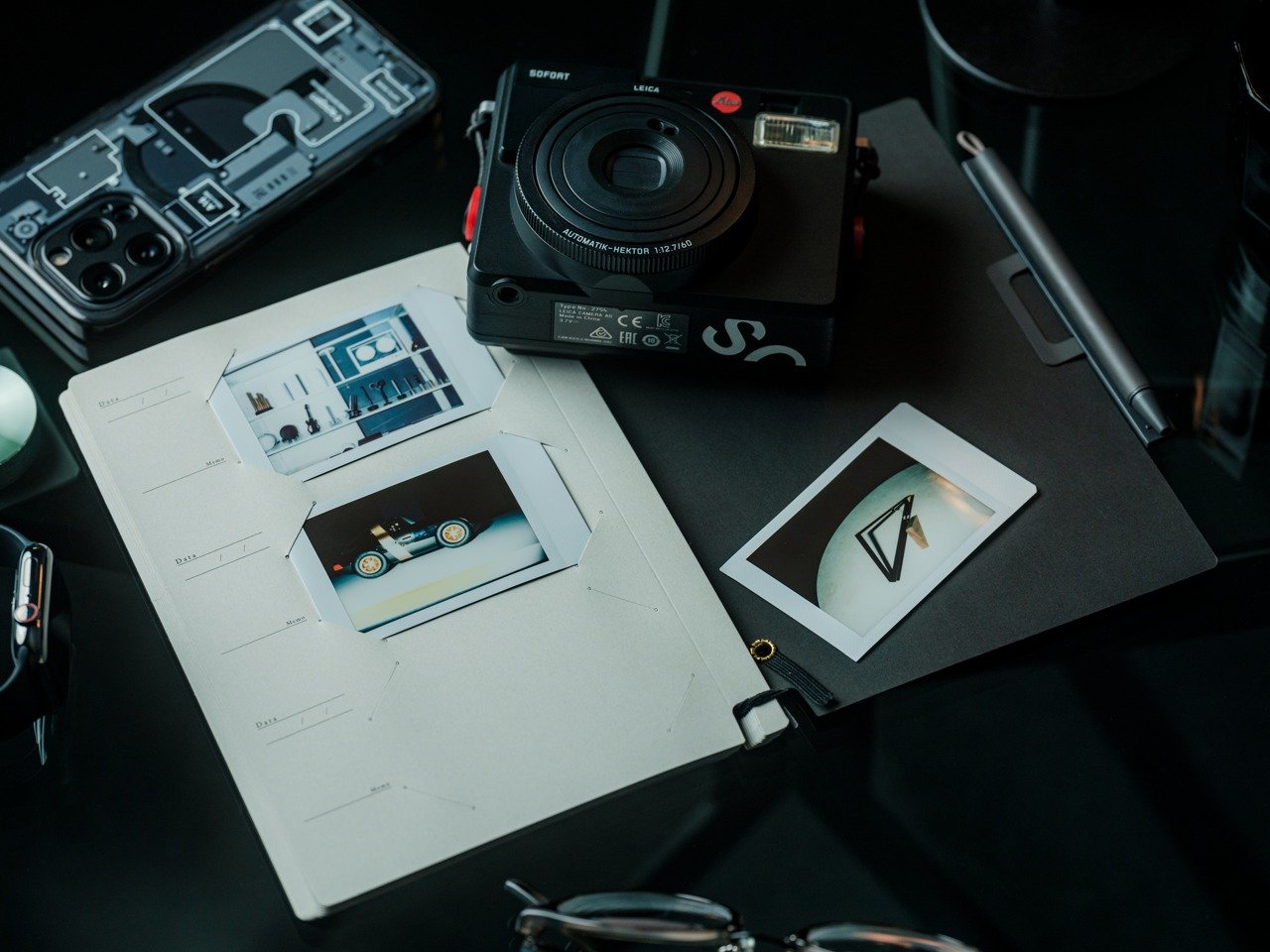
In our hyper-digital age, the humble business card might seem like a relic. But the Memento Business Card Log is here to remind us that sometimes, old-school is the way to go. This isn’t just another organizer—it’s a beautifully crafted piece from Re+g that captures the essence of every connection you make.
Click Here to Buy Now: $19.
Design & Functionality: Where Minimalism Meets Utility
At first glance, the Memento Business Card Log is all about those clean lines and a minimalist vibe. It’s the kind of accessory that wouldn’t look out of place next to the latest tech gadgets. But it’s not just about looks. The binding system is smart—letting you shuffle your cards around like a playlist. No more rigid order. And the two-point slit? It’s like the perfect grip for your cards, paired with paper that just feels good to touch.
Beyond just holding cards, this log gives you space to scribble down those little details—like the witty joke someone cracked or the project you brainstormed over coffee. It’s these personal touches that elevate it from a mere organizer to a memory keeper.
Craftsmanship: A Nod to Japanese Design
Re+g, a brand known for its creative flair and functionality, nails it with the Memento Business Card Log. The paper’s smooth, the cover’s durable yet light—making it easy to slip into your bag without adding heft. And the elastic band? A practical touch that keeps everything secure while adding a dash of style.
Whether you’re a designer, consultant, or exec, this log feels more like a part of your professional kit. Each card you add isn’t just a contact; it’s part of your story.
A Refreshing Take on Networking
In a world where LinkedIn requests fly faster than paper planes, the Memento Business Card Log offers a refreshing pause. With dedicated note space beside each card, it transforms the act of organizing into something reflective. You’re not just filing contacts; you’re documenting stories.
Imagine ending your day by logging each card, capturing what made the interaction special. This turns the Memento Log into a keepsake, bridging you to lasting professional relationships.
What We Like:
Thoughtful Design: The unique binding system and two-point slit design keep business cards securely in place, while allowing for easy rearrangement.
Personal Touch: The space for handwritten notes transforms this log from a simple organizer into a tool for capturing memories.
Craftsmanship: High-quality materials and a tactile paper finish elevate both the aesthetic and the functionality of the log.
Portability: Compact and lightweight, making it the perfect companion for professionals on the go.
What We Dislike:
Limited Capacity: Holding up to 120 cards is enough for most users, but heavy networkers may find themselves needing more space.
Paper Durability: While the paper feels premium, those seeking extreme durability might prefer a more reinforced cover.
Final Verdict
For those who value both organization and meaningful connections, the Memento Business Card Log is a must-have. Whether you’re at a conference or just meeting clients, this log helps you capture not just who you met but why it mattered. It’s more than a business card holder—it’s a part of your career journey.
In a world of fleeting digital connections, the Memento Log offers a tangible way to cherish and preserve professional relationships, ensuring every interaction is remembered for both the contact and the moment.
Click Here to Buy Now: $19The post Capture Every Connection: Memento Business Card Log Review first appeared on Yanko Design.
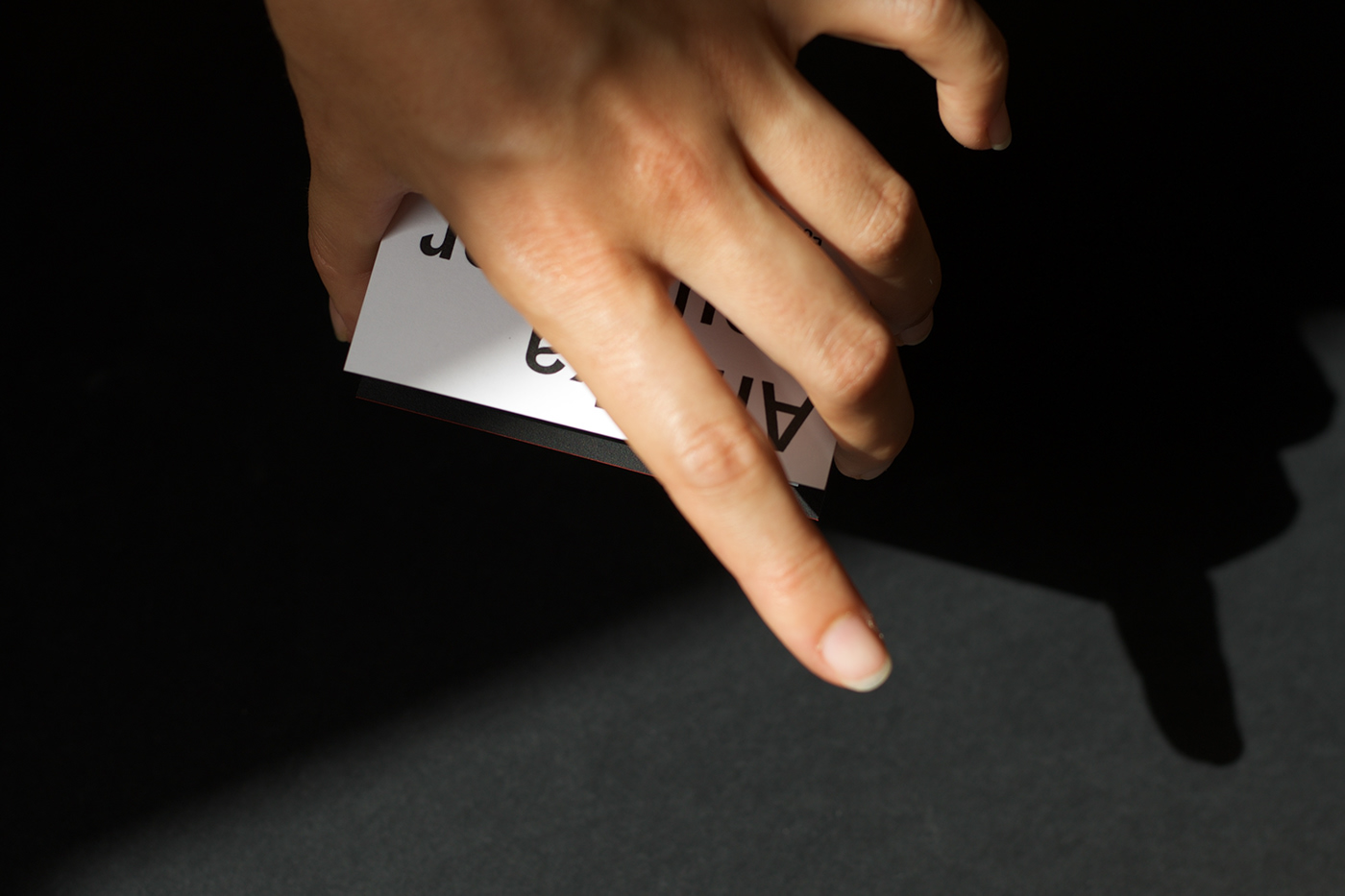
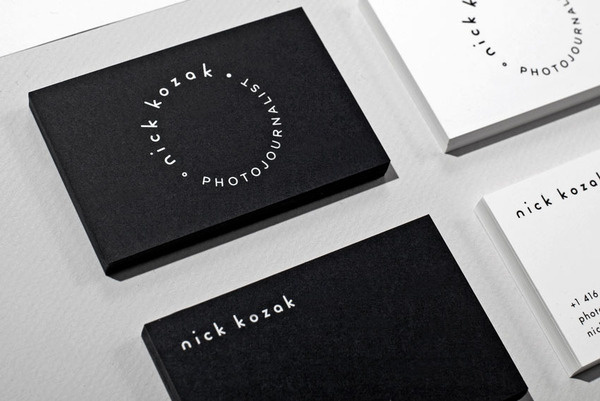
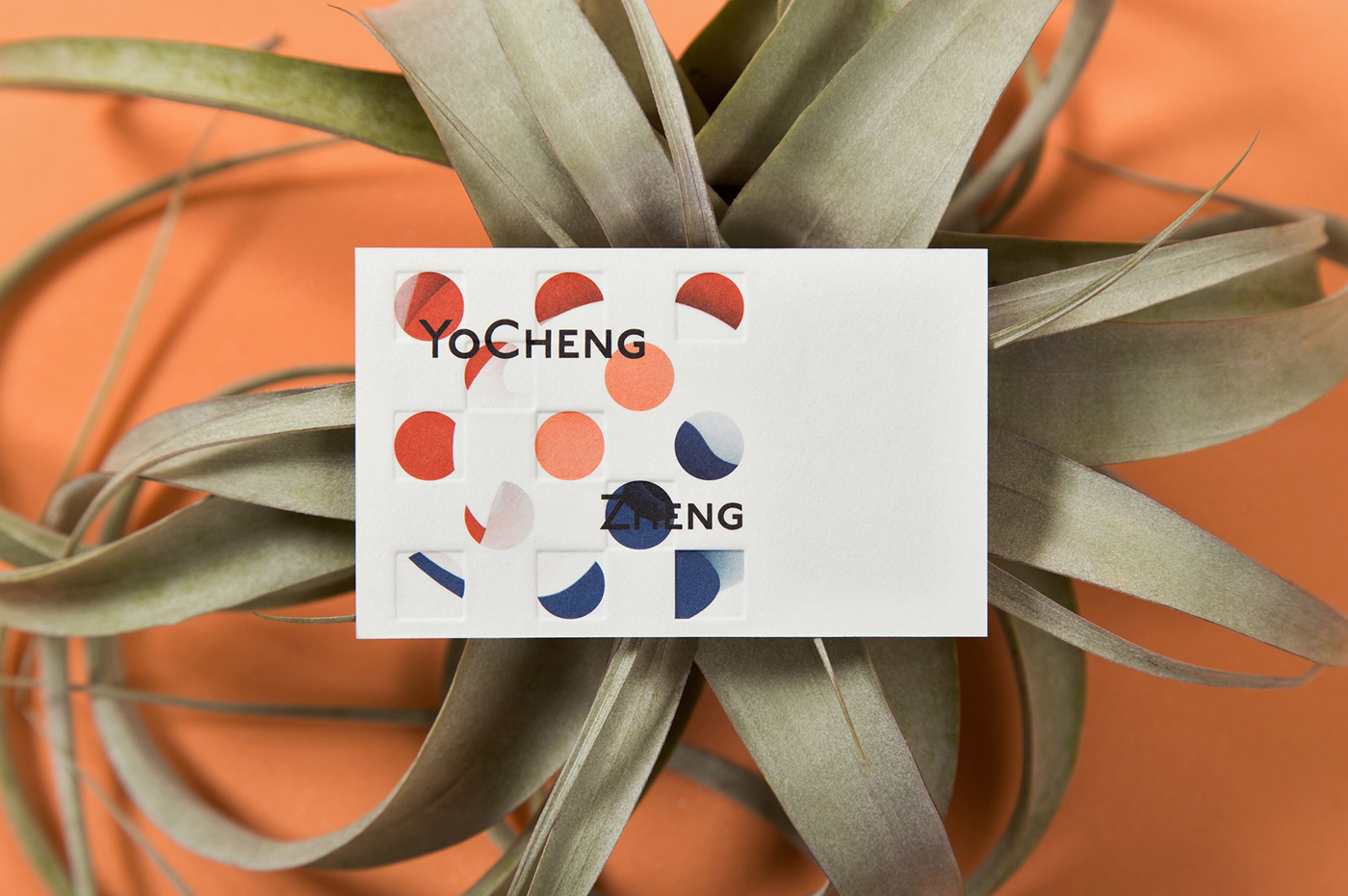
Business cards for our studio Bureau Glyzerin.
We used two of Fedrigoni’s Sirio Color laminated together. The business cards were printed in letterpress.
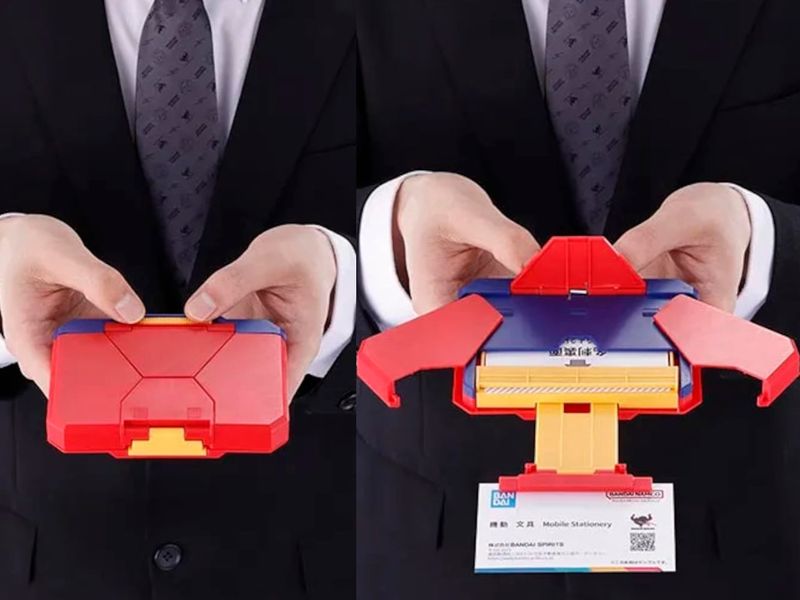
Handing over a business card is, in most professional settings, a fairly unremarkable moment. You produce it, they take it, everyone moves on. Bandai Spirits, the company behind some of the most precisely engineered collectible robots in the world, has decided this moment deserves better. The Mobile Stationery Automatic Transformation Business Card Case deploys your card at the press of a button, rotating 180 degrees with a mechanical flourish that nobody is going to forget.
This is the debut product of Bandai’s new Mobile Stationery line, which is exactly what it sounds like: office stationery built with the engineering sensibility of a collectible mecha toy. The series name in Japanese is 機動文具, which intentionally borrows the kanji for “mobile suit” from Gundam’s full title. That’s not accidental branding. It signals that the same precision manufacturing techniques behind Bandai’s Chogokin die-cast figures went into making a business card holder.
Designer: Bandai
The mechanism itself is the product. When the case is closed, it sits flat and compact at approximately 125mm x 95mm x 25 mm, which is thin enough to slip into a jacket pocket without much bulk. Press the button, and it automatically opens with a 180-degree rotation that presents your card as if a small piece of machinery just woke up. The action is fast, repeatable, and genuinely surprising to anyone who hasn’t seen it before.
It’s made from ABS, the same material used across Bandai’s figure line, and sized to accept standard Japanese No. 4 business cards at 55mm x 91mm and a recommended paper thickness of 0.24mm. The fit matters here because a loose card in an automated case would undermine the entire presentation. The case holds the card securely in the closed position and positions it cleanly during deployment.
Three colorways are available, each aiming at a different kind of professional. The Toy Color is exactly what it sounds like, a vibrant, primary-palette version that makes no attempt to pass for a conventional office accessory and leans directly into the Gundam aesthetic. The Standard Color is subtler and more desk-neutral. The Black Color is the one you’d bring to a meeting where you still want the mechanism to surprise people without the case itself making a statement before it even opens.
The practical argument for something like this is harder to articulate than it might seem, which is part of what makes it interesting. Business card rituals in Japan carry real social weight, and the act of presenting a card is meant to be deliberate and memorable. A case that automates the drama of that moment, that turns the exchange into a small performance, fits surprisingly neatly into that context rather than clashing with it.
The Mobile Stationery line is Bandai’s first move into office accessories, and this particular opening product is doing a lot of work to establish what that line is. It’s a functional object that holds business cards. It’s also a small transformer that deploys them theatrically. Both things are true, and the case doesn’t apologize for either one.
The post Business Cards Were Forgettable, so Bandai Built a $22 Mecha Case first appeared on Yanko Design.
We pass business cards around as a way to help people remember us when they need to contact us, but most business cards are really just pieces of board paper with information printed on them. They’re not big enough to list all your noteworthy achievements, let alone showcase your talents. In other words, many of them are forgettable, unless you yourself left quite an impression when you left your card with people.
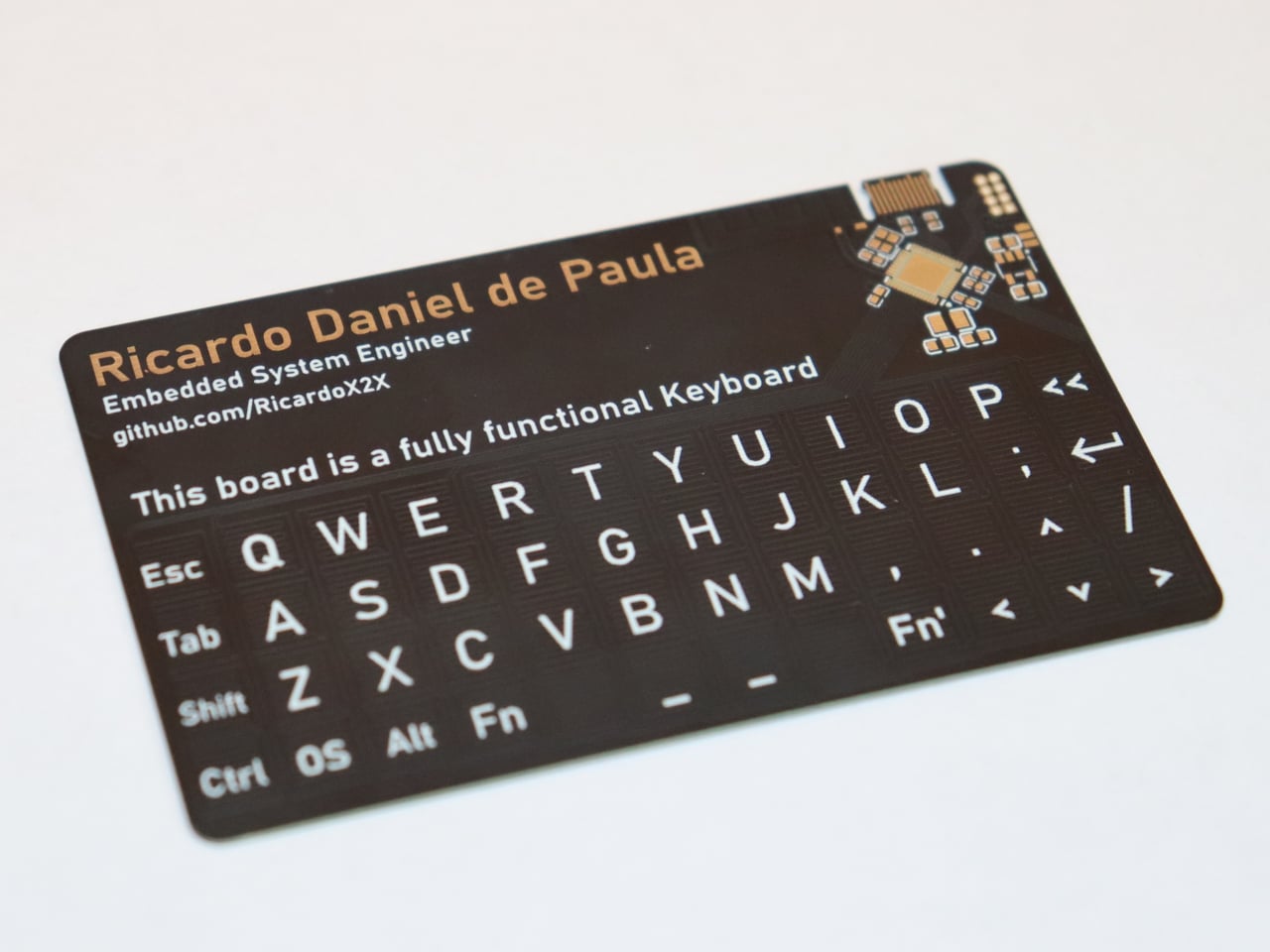
Some people do craft stylish and elaborate business cards, but their novelty fades easily, and so do the memories. It’s quite a design challenge to make such a small object represent you in the best way possible, which is what makes this rather creative solution even more impressive by showing off electrical engineering prowess with a tiny keyboard the size of a business card.
Designer: Ricardo Daniel de Paula
We’ve all seen tiny keyboards for smartphones and other devices, but those are still big enough to accommodate an average thumb size. This Keyboard Business Card, in contrast, is literally the size of a business card, so there’s not much in the way of comfortable typing. Of course, that’s not the point of this design anyway, which is to present the designer’s skills and the use of certain technologies.
Since there’s pretty much nothing like this in the market or previous DIY projects, it had to be designed from scratch with very little in the way of reference. At first glance, it looks simply like an elaborate business card that just happens to have a PCB (printed circuit board) and geeky theme, except for the text that clearly states that it’s a fully functional keyboard. Well, a fully functional 40% keyboard, at least.
The card springs to life thanks to a USB-C connector in the upper right corner of the card. It doesn’t go into detail, but it will likely plug into a USB-C cable that’s connected to a device like a computer. It would probably be more convenient if you could plug the card directly into something like a Phone’s USB-C port, but the design of the plug doesn’t exactly allow for that.
Will it be a useful keyboard that you can take with you and use anywhere? Hardly, but it does get the message across. It will definitely leave a bigger impact, even if just for its design. At the very least, it also serves as a very short 8.5cm ruler, so still serves a purpose even if you will never use it for typing.The post Ingenious business card is a circuit board that is also a working keyboard first appeared on Yanko Design.
Transform Business Cards into Cherished Memories with This Minimalist Log BookBusiness cards and shop cards are often regarded as boring, impersonal representations of people and places, but that’s partly because we often forget to associate...
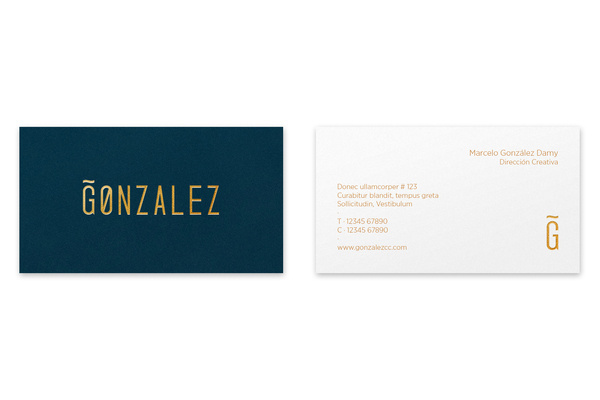
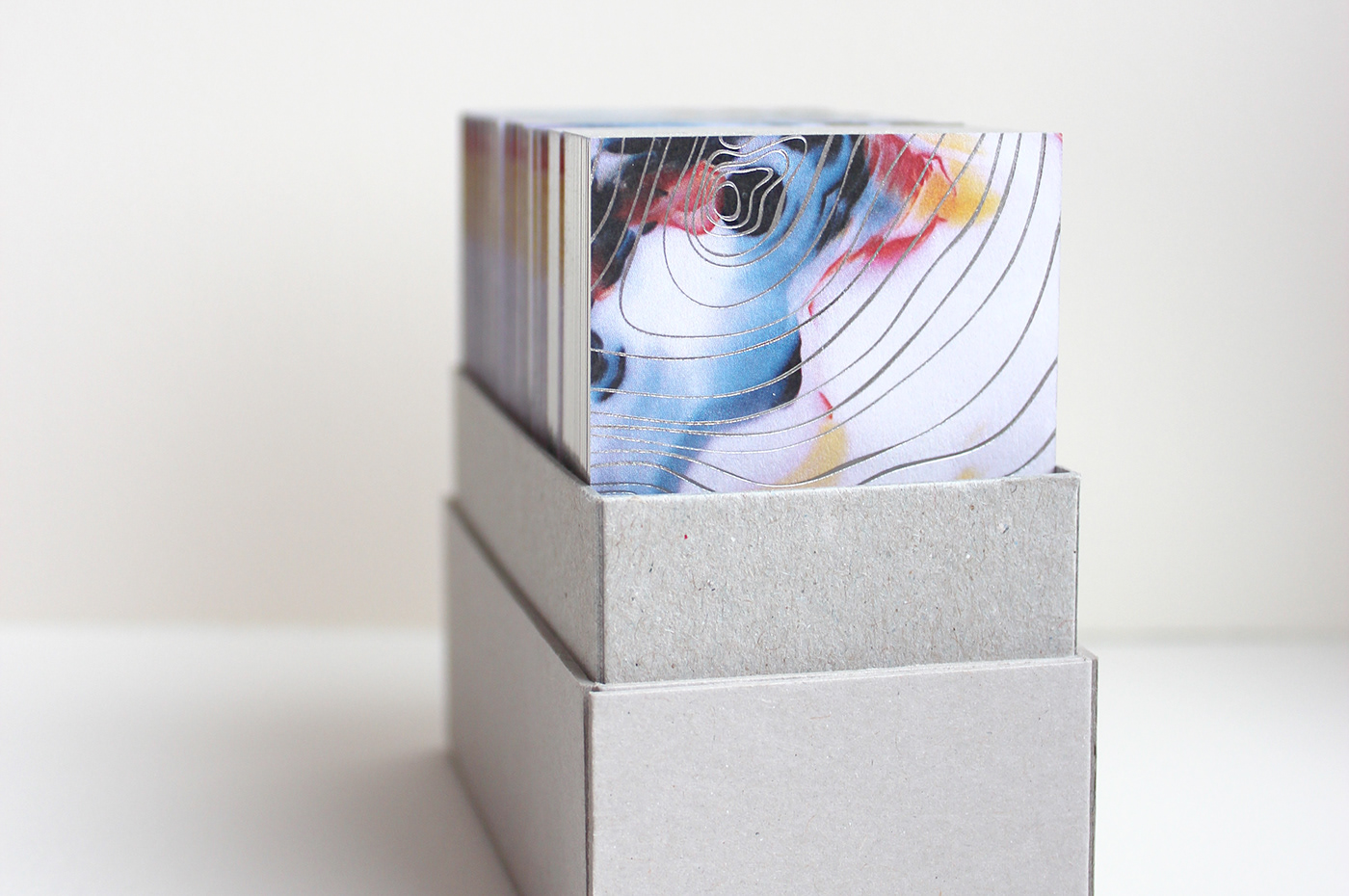
Print technologies and materials:
Keaykolor royal blue 300 gr. & Pur cotton cocaine 350 gr.
Letterpress
Mat silver foil stamping
Silvering faces with foil
It is a business card designed for a freelance motion designer. The design was aimed to retain the characteristic elements created by the motion designer while trying to be representative and recognizable. As the motion designer is skillful at 3D and dynamic material mixing effects, the project was intended to be completed in a cooperative manner.
The concept of motion graphics is reduced to pixels and frames. Pixels and pixels constitute the picture, and different pictures come together to become a frame and then the dynamic state. Through the construction of geometric figures and the effect of concave and convex, the time transition in the motion image is conveyed by means of plane design.
This is 1% of what Muzli shows you.
Get the rest — fresh design inspiration on every new tab, free.
Get access to thousands of freshly updated design inspiration pieces by adding Muzli to your browser. Loved by 900k designers worldwide, Muzli is the leading go-to browser extension for creative professionals.
How do you design a business card that people actually keep?
Most business cards end up in a drawer or recycled within days. The cards that get kept do one thing well: they create a memorable impression that reflects the person's or brand's actual character. Unusual finishes, die cuts, and material choices (metal, wood, thick textured stock) accomplish this more reliably than clever layout alone. But the more important question is function — an unusable business card is not a good business card regardless of how beautiful it is. Contact information must be readable, not designed.
What information actually belongs on a business card?
Name, primary title, company name, one phone number, one email address, and website — that's typically sufficient. Resist the impulse to include every possible contact point; it makes cards harder to scan. A QR code linking to a digital business card, portfolio, or meeting scheduling link is one of the few genuinely useful additions in current use. Social handles belong only when they're the primary or preferred contact method for the recipient's context.
What print finishes and materials make business cards stand out?
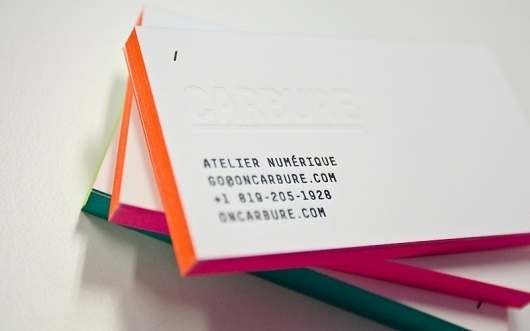
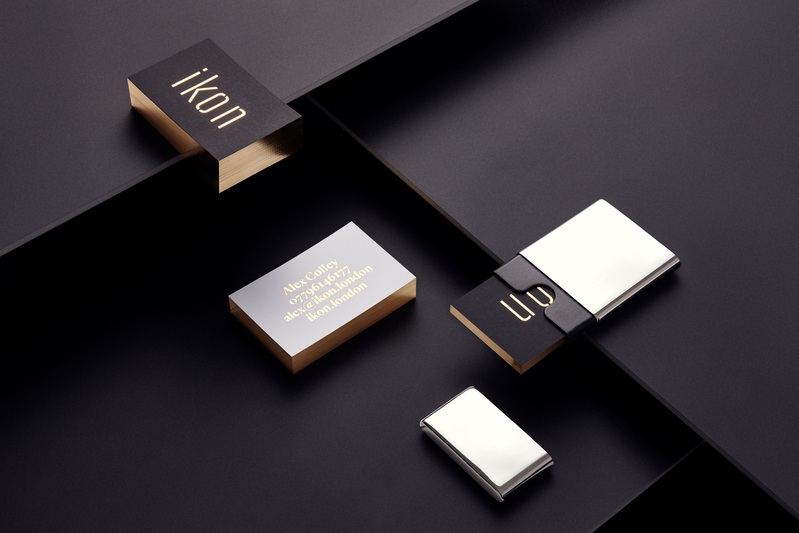
Spot UV coating on selective elements within a matte finish card creates tactile contrast that makes cards physically distinctive. Foil stamping (gold, silver, holographic) on a single design element adds perceived premium value at moderate cost increase. 400–600gsm thick stock with soft-touch lamination is the default choice for design professionals — it communicates quality through weight and texture before a word is read. Edge painting turns a standard card into an object worth remarking on.