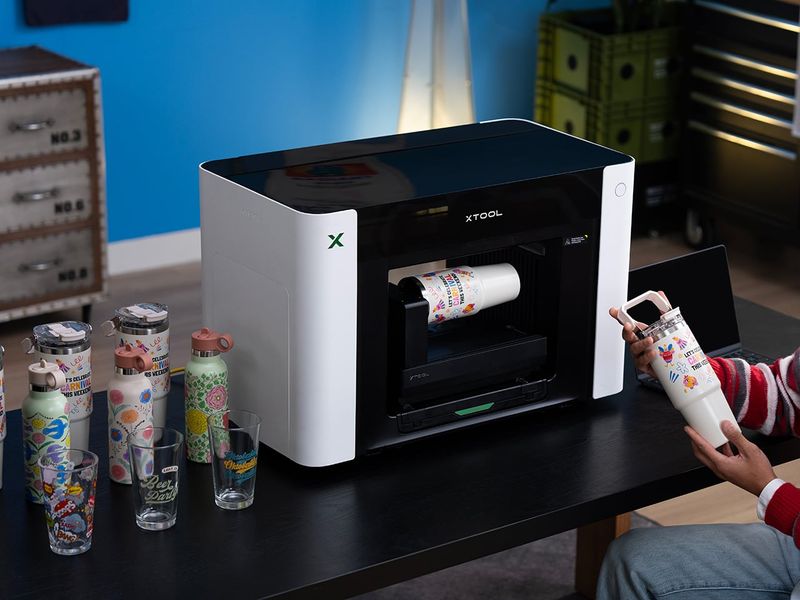
When a desktop printer moves 6,000 units and clears $20 million in revenue on day one, something is clearly going on beyond the usual pre-launch hype cycle. The xTool O1 Omni Printer is a 4-in-1 desktop system merging UV, DTG, DTF, and UV DTF printing in one modular machine, a combination that previously required four separate devices and considerable floor space. For years, creators have been burdened by fragmented workflows, forced to buy separate, single-purpose machines for rigid substrates and textiles. Desktop UV printing has been one of the more notable maker-market stories of 2026, and the O1 is making a clear bid for category leadership. The central design proposition is capability consolidation, and day-one sales suggest it landed with the right people.
Units have already begun shipping, turning pre-order momentum into machines arriving at actual studios and workshops. On August 27, the first offline debut of the O1 Embroidery happened at the Next Level Conference x xTool SMB Summit, where live demos will give attendees their first hands-on encounter with the platform’s textile and dimensional output. That event was a deliberate venue choice: the Summit brings together the small business creative community the O1 is built for, and debuting the embroidery capability there sends a clear signal about where xTool sees the product’s core application. Three editions run from $1,899 for the Single UV configuration to $2,999 for the full UV + Fabric hybrid. The modular dual-printhead system is the engineering decision that holds the entire consolidation promise together.
Designer: XTOOL
Click Here to Buy Now: $1899 $2499 ($600 off). Hurry, deal ends in 48-hours!
The dual-printhead architecture is what separates the O1 from every desktop printer in its class, operating more like a configurable platform than a fixed device. Users can run dual UV printheads for layered effects and accelerated throughput, or swap in a fabric printhead to shift between hard goods and garment workflows on the same machine. UV output covers wood, acrylic, glass, and metal with raised 3D texture effects up to 7mm deep, supported by a 2,000-plus texture library. The fabric side handles DTG and DTF workflows, including on curved and irregular surfaces, with an OEKO-TEX certified system that survives 50-plus washes without fading. A Rotary Attachment extends the platform to cylindrical objects like tumblers, with Automated 3D Modeling covering 90% of mainstream shapes for a 1:1 design preview before printing.
Positioning accuracy is delivered by xTool’s Pixel-Scan Vision System, combining Line Laser Altimetry and CIS Scanning. A Laser-Guided Auto-Focus detects each object’s highest point before printing, eliminating printhead collisions on uneven surfaces. Unlike traditional distorted fish-eye cameras, the 1:1 Distortion-Free CIS Scanning offers close-range, high-definition scans with zero dead zones, powering a jigless “Drop & Print” workflow that removes alignment jigs from the equation, which is a more meaningful time-saver than it sounds in an actual production environment. xTool Studio’s AI Contour Recognition instantly identifies irregular shapes to fill designs perfectly while automatically avoiding holes like camera cutouts. The Laser + UV Seamless Workflow lets users laser-cut a workpiece and move it to the O1, where the software automatically recognizes and aligns the print with zero manual recalibration.
Three editions cover the full range from single-mode UV to full hybrid, priced between $1,899 and $2,999, with each tier differentiated by workflow rather than arbitrary specs. The entry-level UV Edition at $1,899 targets rigid material personalization across wood, acrylic, glass, and metal. The Dual-Head UV Edition at $2,899 adds fluorescent neon inks for blacklight effects and specialized soft and hard white inks for materials like leather. The UV + Fabric Edition at $2,999 is the full cross-category hybrid, covering both hard goods and garment workflows through the OEKO-TEX certified fabric system. All three share the Pixel-Scan Vision System and xTool Studio, keeping the intelligence layer consistent across the lineup.
UV printing at the studio scale has historically required dedicated ventilation and careful ink handling, which kept the workflow inside commercial print shops. The O1 uses GREENGUARD-certified, non-reprotoxic inks and an advanced built-in air filtration system to eliminate odors in home studios. SmartCycle 2.0 automates routine care to prevent clogging, offering 14-day vacation-ready support that lets users step away with confidence and return to a machine that is ready to run. The Dual-Head UV Edition adds specialized flexible white inks, expanding the material list to leather goods and flexible substrates. Taken together, these decisions position the O1 as a machine built to live in a real creative workspace, not parked in the back corner of a commercial print shop.
The O1 Embroidery made its first public hands-on appearance at the Next Level Conference x xTool SMB Summit on August 27, putting the platform’s most dimensional textile output in front of the small business creators it is built for. Desktop UV printing has heated up considerably in 2026, with machines like the eufyMake E1 generating real market attention, and the O1 is making a clear bid for the consolidation position in that category. The 6,000-unit, $20 million day-one performance signals the market was ready for this hardware category long before the product arrived. Explore the full xTool O1 Omni Printer lineup and configure your edition at xTool’s website.
Click Here to Buy Now: $1899 $2499 ($600 off). Hurry, deal ends in 48-hours!The post xTool O1 Omni UV Printer Prints on Wood, Metal, Glass, and Your T-Shirts, All From One Desktop Machine first appeared on Yanko Design.
Kraken Capsule × losdibujitosdepablo
2025
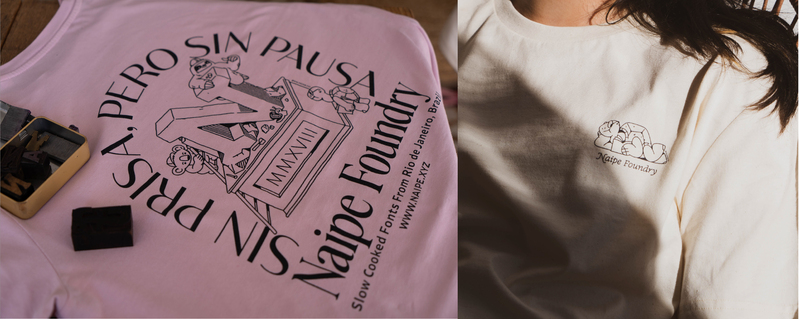
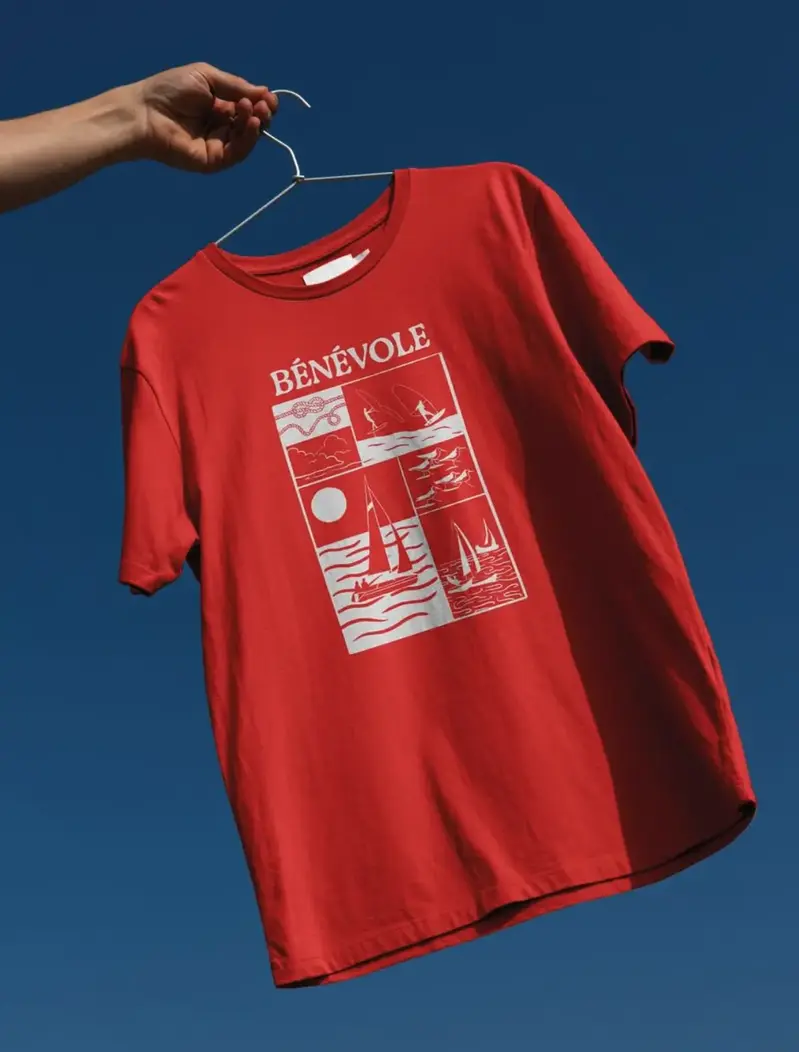
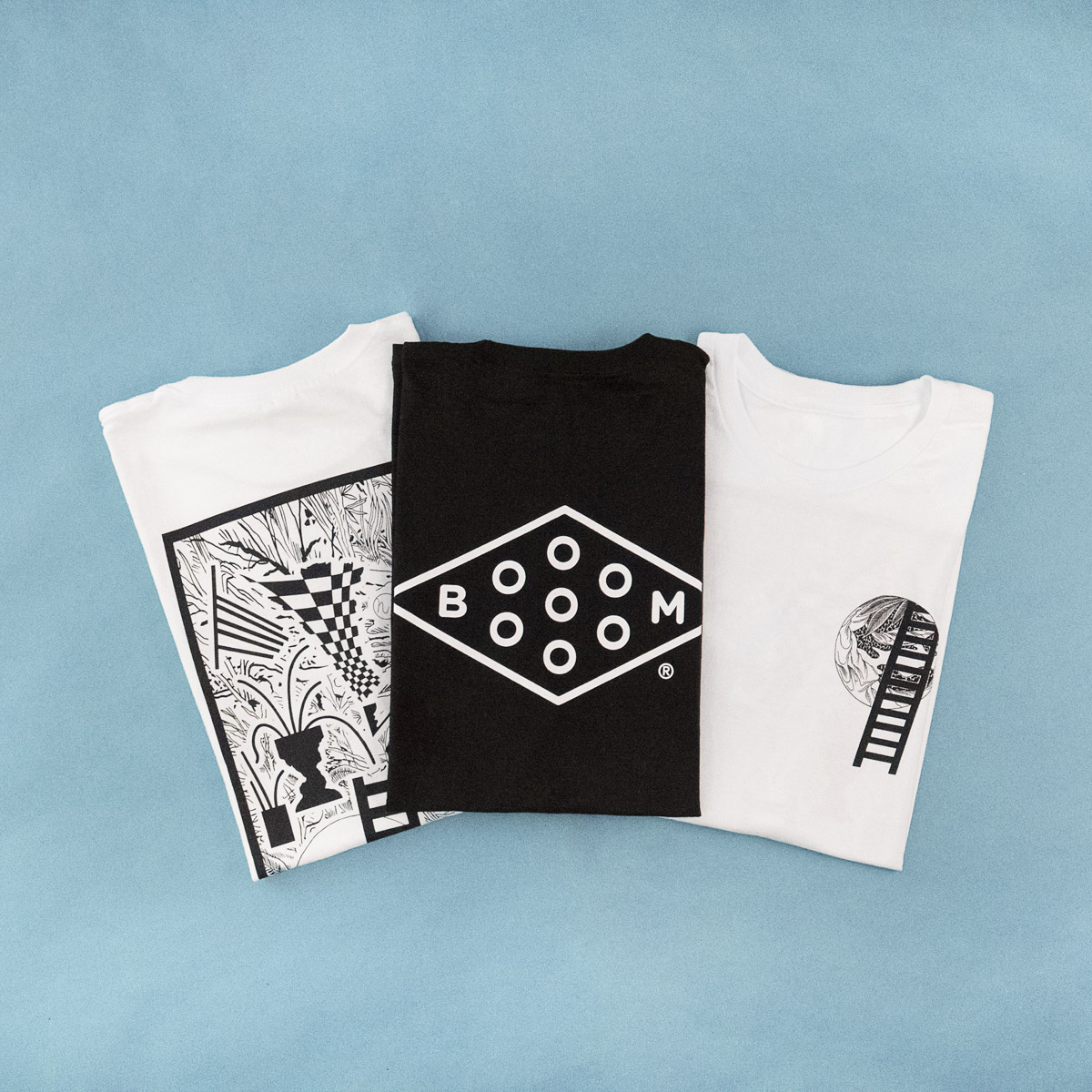
Series of five illustrations for T-shirt prints. Original ink drawing converted to vector. Single-color screen printing on colored T-shirt.
Project carried out for Kraken (Uruguay).
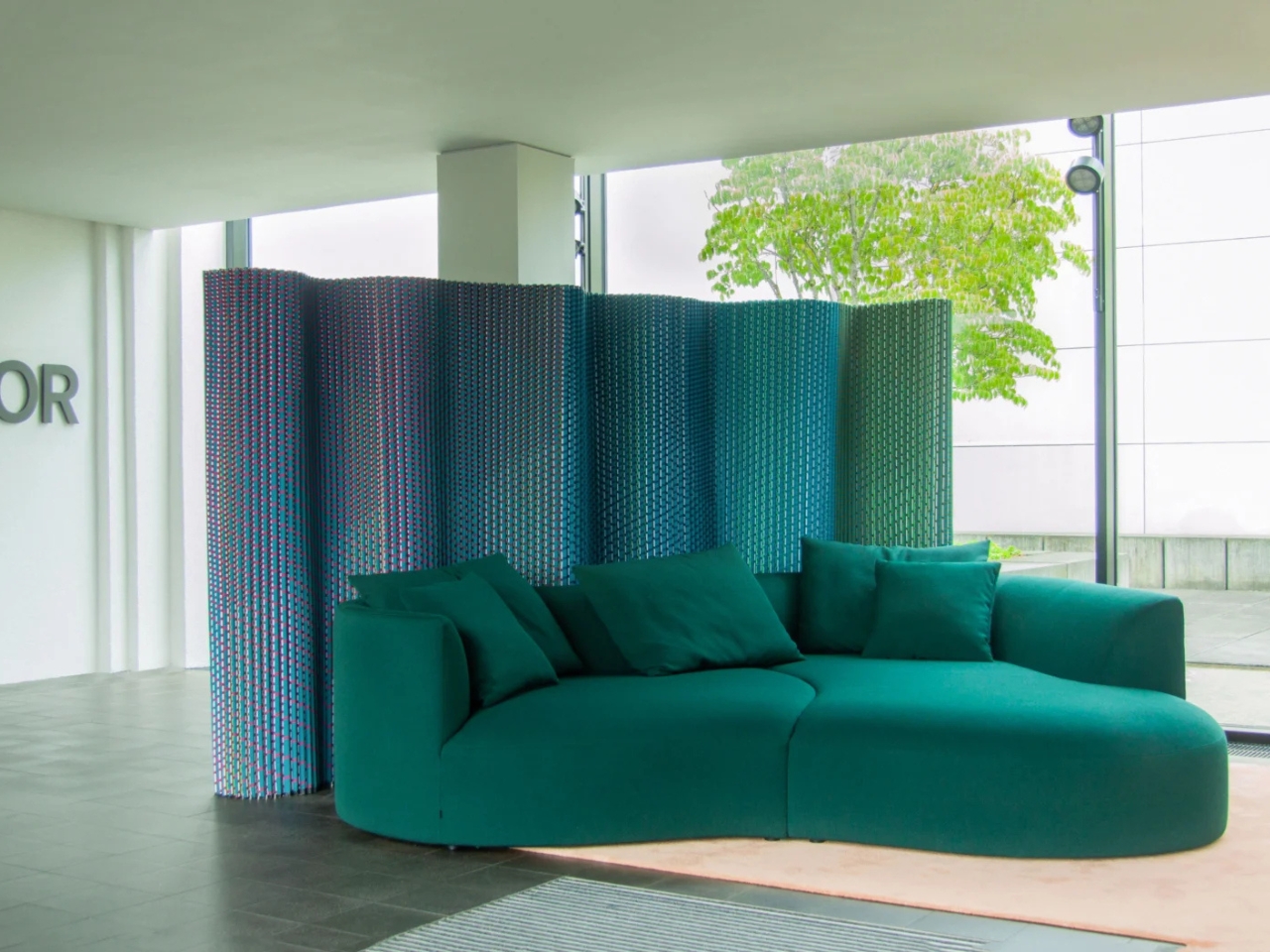
Have you ever looked at a piece of fabric and wondered what would happen if you gave it superpowers? That’s essentially what Dutch design studio Luis Marie did with their latest creation, Plissade, a room divider that’s turning heads for being completely, wonderfully, all about textiles.
Here’s the thing about room dividers: they’re usually pretty predictable. You’ve got your folding screens, your sliding panels, your wooden frames with some fabric stretched across them. They do the job, sure, but they’re not exactly exciting. Plissade, on the other hand, ditches the traditional playbook entirely. Instead of relying on rigid frames or heavy materials, this sculptural partition stands on its own through the power of pleating alone.
Designer: Luis Marie
The designers behind this clever piece, Fenna van der Klei and Patricio Nusselder, drew inspiration from the traditional craft of textile pleating, where fabric is carefully folded to create different shapes and volumes. It’s the same technique that gives your favorite pleated skirt its structure or adds dimension to fancy curtains. But here, pleating isn’t just decorative. It’s doing all the heavy lifting, quite literally. The folds are engineered in a way that gives the divider enough rigidity to stand upright without any additional support, which is pretty remarkable when you think about it.
What makes Plissade even more interesting is what it’s made from. The inner layer consists of felt created from recycled post-consumer polyester clothing. Yes, that means your old t-shirts and jeans could theoretically have a second life as sound-absorbing room dividers. The outer layer features woven textile made from recycled polyester yarns. So not only is this piece solving the age-old problem of dividing space in style, it’s also addressing our growing waste problem in a tangible way.
The acoustic properties are another bonus feature that makes Plissade particularly relevant for our modern living situations. With more people working from home and living in open-plan spaces, the need for flexible sound management has never been greater. Those pleated layers of textile don’t just look sculptural, they actually absorb sound, creating little pockets of acoustic privacy without the permanence of walls.
And then there’s the visual impact. Luis Marie offers Plissade in vibrant colors that create optical illusions reminiscent of gem facets. The way light plays across those pleated surfaces changes depending on your viewing angle, making the divider feel alive and dynamic. It’s the kind of design detail that transforms a functional object into something you actually want to look at. In a world where so much of our stuff is just background noise, having a piece that demands attention in the best way possible feels refreshing.
What Luis Marie has really done here is challenge our assumptions about what textiles can do. We’re used to thinking of fabric as something that needs support, something that drapes and folds because it’s soft and pliable. But Plissade proves that with the right engineering and understanding of material properties, textiles can be structural, functional, and beautiful all at once. For anyone who loves the intersection of old techniques and new applications, this room divider is a fascinating case study. It takes centuries-old pleating knowledge and applies it to solve very current problems: flexible space division, sound absorption, sustainable material use, and visual interest in our homes and workspaces.
Whether you’re dealing with a studio apartment that needs better zoning, an office that could use some acoustic help, or you simply appreciate design that makes you think twice about material possibilities, Plissade offers something genuinely fresh. It’s a reminder that sometimes the most innovative solutions come from looking at traditional crafts through a contemporary lens and asking, “What if we pushed this further?”
The post This Dutch Studio Just Built a Room Divider From Old T-Shirts first appeared on Yanko Design.
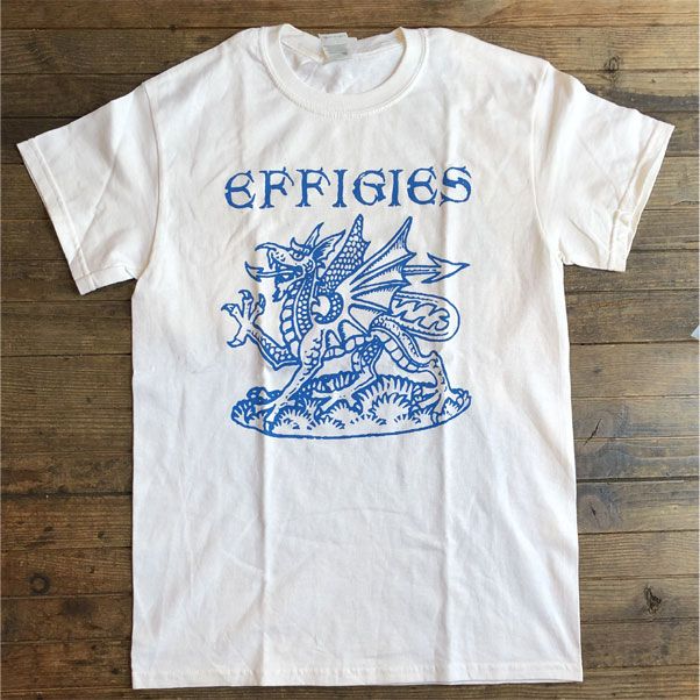
The classic UK emo band has reached its 20th birthday. For the special occasion, the seven-piece outfit has created an archive of every piece of T-shirt they put out, charting the aesthetic values, political attitudes and sometimes football madness from 2006 until now.
The attempted assassination of Donald Trump has spawned a frenzy of online merchandise featuring a picture of the U.S. presidential candidate just after he was shot, with slogans such as “Bulletproof”, “Legends Never Die”, “Grazed but not Dazed”, “Shooting Makes Me Stronger.”
With prices ranging anywhere from around $9 to $40, T-shirts emblazoned with images of Trump pumping his clenched fist in the air while blood streaks across his face have gone viral.
Within hours of the shooting, businesses and independent sellers scrambled to create slogans and merchandise — mostly depicting the Republican presidential candidate as defiant — in what has become the latest in a long line of Trump products.
“(The sales) exceeded my expectations. I didn’t expect that Trump would have so many fans,” said Zhong Jiachi, 28, owner of Paxinico, a clothing merchant on Douyin, the Chinese version of Tiktok, who sold around 40 T-shirts with the image of Trump just after he was shot, within 24 hours.
Li Jinwei, 25, who sells goods on Alibaba’s Taobao platform told Hong Kong media it took roughly just half a minute to produce a Trump T-shirt at her factory in China.
“We put the T-shirts on Taobao as soon as we saw the news about the shooting, though we hadn’t even printed them, and within three hours we saw more than 2,000 orders from both China and the United States,” she said.
The look of Trump glaring into a camera, which appears in much of the previous merchandise that features him, echoes his trademark pose in “The Apprentice,” the reality television show he starred in for several years.
In 2023, a mughost of Trump was quickly turned into T-shirts, shot glasses, mugs, posters and even bobblehead dolls by friends and foes alike.
On Saturday, supporters and campaigners quickly embraced the image of Trump taken just after a 20-year-old man shot at him from a rooftop as they rally around him ahead of the U.S. presidential election in November.
The former U.S. president was holding a campaign rally in Butler, Pennsylvania – a key state in the Nov. 5 election – when shots rang out, hitting his right ear and leaving him bloodied.
—Marcus Lum and Sophie Yu, Reuters
Sharing the design I did for the new merch using the Cursed Artwork from the latest collab with Miantan.
You can get the Merch here:
https://noxinvictus.com/
.
.
.
www.noobovich.com
www.noxinvictus.com
.
Become a supporter:
https://www.patreon.com/noobovich
.
Join the stream for future artworks
https://www.twitch.tv/noobovich
https://www.instagram.com/noobovich/
https://twitter.com/ibrahem_swaid
Vollebak’s new 100% biodegradable T-Shirt is made from plants and algae!Another new month, another new experimental garment from the inimitable creative apparel powerhouse that is VolleBak… except this time they haven’t made a hoodie that glows,...
原画来自Rui Li 的这张图https://www.artstation.com/artwork/6aPqvV
仍旧是用的zb和blender,希望你喜欢
The original painting is from Rui Li.
use zb and blender, hope you like it
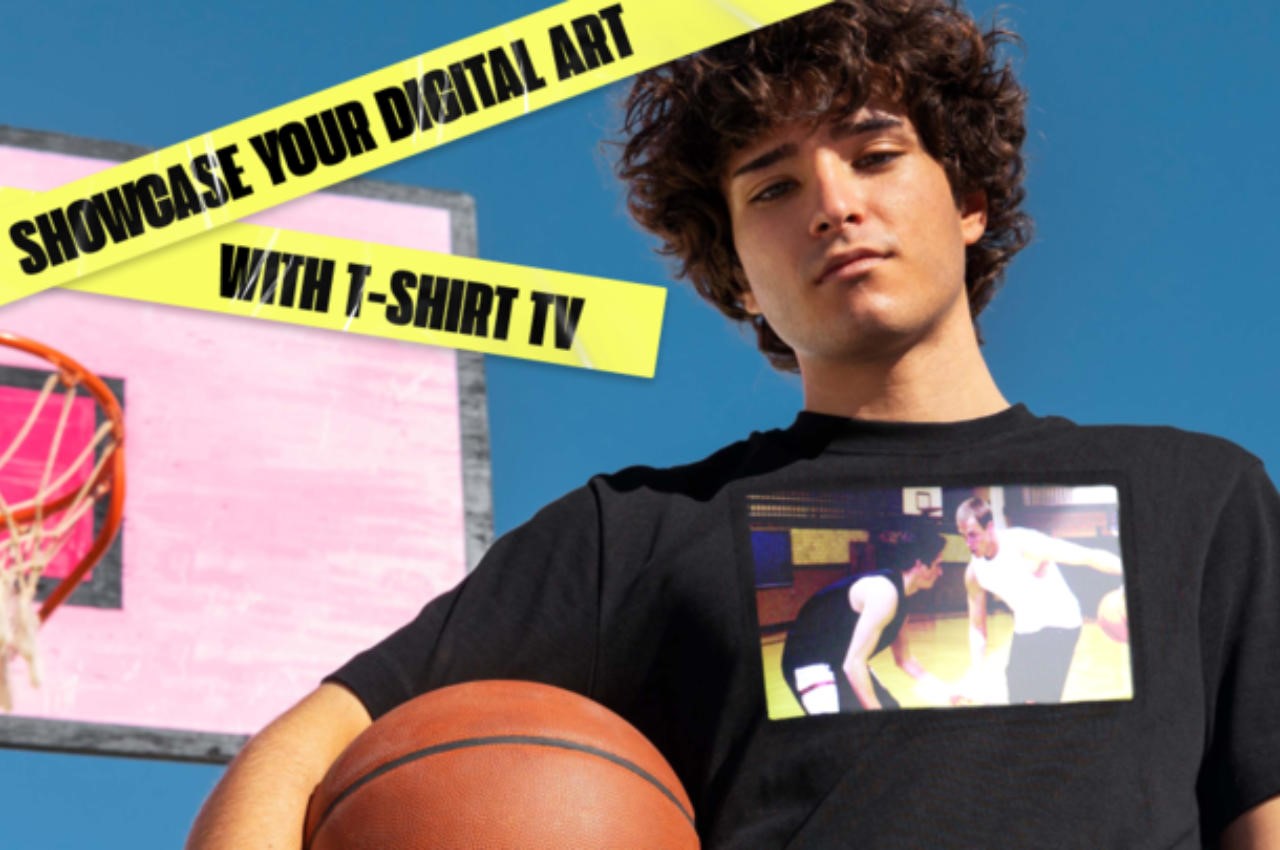
This T-Shirt has a Wearable Display that lets you turn GIF Reactions into Fashion!Have you ever wished your mood or thoughts could be broadcasted to the world and people just understood you without you having to say a...
This is 1% of what Muzli shows you.
Get the rest — fresh design inspiration on every new tab, free.
After Tuesday’s presidential debate between Donald Trump and Kamala Harris, global superstar Taylor Swift officially endorsed Harris via an Instagram caption.
Weirdly, both campaigns released merch in response.
Within an hour post-debate, the Harris-Walz campaign began selling friendship bracelets inspired by popular Eras Tour accessories, which sold out in under a day. And after Trump slammed Swift for her endorsement and claimed she would “pay a price” for it, his campaign also released an official (and deeply cringeworthy) t-shirt inspired by Swift’s own merch.
Instead of the singer’s face, though, the $36 shirt features a grid of Trump images that include his mugshot, a photo from the rally where he was shot in the ear, and several iterations of him raising his fist in the ear.
[Photos: taylorswift.com, Trump Campaign]
Swift clearly has a broad impact on culture at large (just take a look at the ride-or-die attitude of her closest followers, or her ability to drive sales for the NFL). In the past, Fast Company has described her political endorsement as “the most coveted—and feared—in the world.”
Late last month, Trump tried to play off an AI deepfake of Swift as a real endorsement. Now, though, his team’s merch release in the wake of Swift’s real endorsement feels like a hollow, desperate attempt to continue appealing to her massive fanbase, which only further highlights the Harris campaign’s branding skills. Swift has yet to officially respond to Trump’s new merch play, and it’s unclear whether the design may be grounds for an IP suit.
Swift’s endorsement, and the subsequent merch, come during a political cycle in which both campaigns are using merch as a kind of battleground to duke it out over their opposing ideological branding. Trump has his new “Never Surrender!” logo (appearing on hats, bumper stickers, and yard signs), which he adopted after being booked at the Fulton County jail in Atlanta on 13 felony charges; meanwhile, the Harris-Walz campaign has churned out Gen Z-targeting apparel like a Chappell Roan-inspired camo hat.
Fast Company reached out to Swift’s representation for comment on Trump’s new merch and will provide an update if we receive a response.
Get access to thousands of freshly updated design inspiration pieces by adding Muzli to your browser. Loved by 900k designers worldwide, Muzli is the leading go-to browser extension for creative professionals.
What design principles make t-shirt graphics work on fabric and at scale?
T-shirt design operates under constraints that screen design doesn't: ink coverage limits, garment stretch, wash durability, and the fact that the canvas is a three-dimensional object seen from any angle. These constraints shape the best creative approaches. High-detail photograph-style designs require high-fidelity printing processes (DTG or sublimation) and degrade quickly in lower-quality screen printing. Bold area fills, limited color counts, and high-contrast designs work across every print method and age well with washing and wear.
How does print method affect t-shirt design choices?
Screen printing (the most common and durable method) limits designs to 4–6 spot colors with no gradients or photographic detail. Each color is a separate screen with added cost. DTG (Direct-to-Garment) printing supports full-color photographic designs but lacks the ink density and durability of screen print. Embroidery works only with solid shapes and flat colors; fine line work and small text below 8pt become unstitchable. Knowing the print method before designing is not optional — it determines which design approaches are viable.
What are the composition and placement guidelines for t-shirt design?
The standard placement for chest graphics is centered, 3–4 inches below the collar. Width should be 10–12 inches for adult tees — wider extends uncomfortably into the armhole area. Oversized prints extending to the hem are a stylistic choice, not an error. Back placement centers at the yoke for logo/text or at torso center for larger graphics. Avoid designs that require precise centering on seams — garment construction tolerances mean placement can shift 0.5–1 inch between units.